
5 UI/UX Trends to Watch in 2026
{"html":" UI/UX in 2026: What actually moves the needle Trends are only useful when they improve outcomes: faster task completion, fewer errors, higher retentio
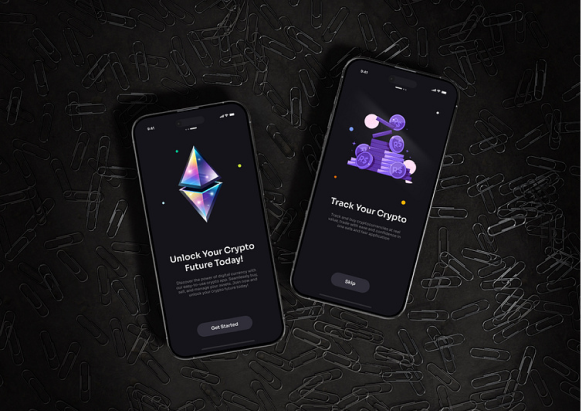
UI/UX in 2026: What actually moves the needle
Trends are only useful when they improve outcomes: faster task completion, fewer errors, higher retention, and clearer product understanding.
1) AI-assisted personalization (with control)
Personalization works when users can inspect and override suggestions. Don’t hide logic.
- Provide “Why am I seeing this?”
- Allow opt-out per feature
- Prefer progressive disclosure over aggressive automation
2) Accessible motion & micro-interactions
Motion should guide attention, not steal it. Always support reduced motion.
Rule: animations must never block completion of a core task.
3) Design systems that scale across products
Teams win when tokens, components, and patterns are shared and measurable.
- Tokenize spacing, typography, color, radius
- Define content rules (headings, summaries, CTAs)
- Measure adoption (coverage %)
4) Performance-first UX
Performance is a feature. Treat it like one.
| Metric | Target |
|---|---|
| INP | < 200ms |
| LCP | < 2.5s |
| CLS | < 0.1 |
5) Content clarity as interface
Shorter beats clever. Labels beat icons when stakes are high (payments, destructive actions).
// Good: explicit
Delete project
// Bad: ambiguous
Remove
Practical checklist
- Audit top 5 user flows
- Define UX baseline metrics
- Ship improvements in 2-week iterations
- Validate with usability tests
Conclusion
In 2026, the best teams will pair speed with control: accessible motion, measurable systems, and performance-first UI decisions.
About the author
Full-Stack Developer and GEO/SEO Specialist
Orhan Güzel builds production-ready web platforms and business software with Next.js, Fastify, and Laravel — based in Germany.